About Sue Dawson

This author has not yet filled in any details.
So far Sue Dawson has created 71 blog entries.

Can’t help it but we’re creative …

A guest blog: by Eli Dagostino

FOR 25 YEARS Alison Shaw and her students have posed together for a group photo at the end of each of her fall photography workshops. Alison has always enlisted the help of her partner in crime (the workshop assistant) to take the photo. Last year was my first year assisting the internationally renowned fine-art master, and when I was put to the task of taking the traditional photo for our group, Alison made it clear that she didn’t want the shot rushed and that it definitely had to be something fun and creative.

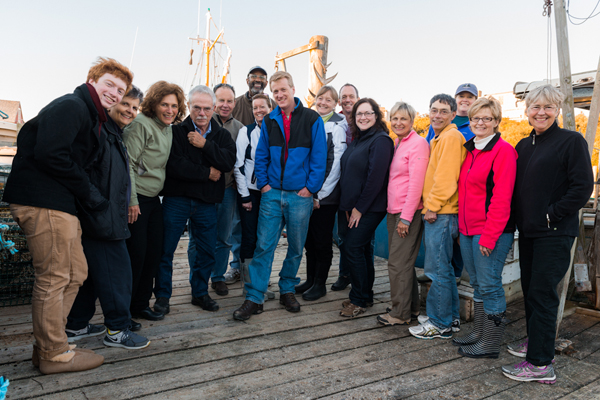
I made the same mistake as assistants past and waited until one of the last days to take our group photo. We planned to shoot in Menemsha that evening, and I decided this would be a great time to get everyone together and quickly (without taking the students away from their shooting adventures) take THE shot. We notified the students in the morning and proceeded to put together a shot that night. It was eh….
Being someone who really appreciates a story telling portrait, I would compare the viewing experience of this “eh” shot to eating terribly executed scrambled eggs:
dock group shot

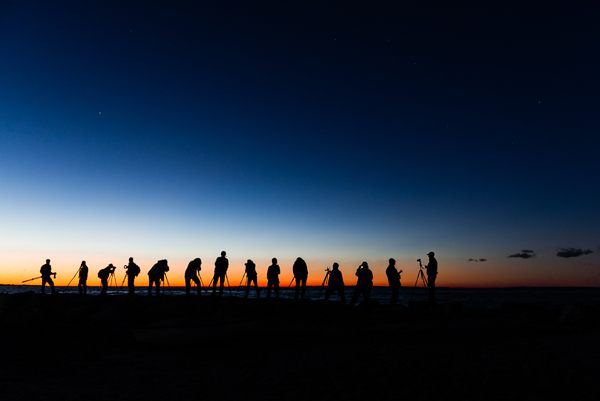
Luckily, I had the perfect opportunity to redeem myself later that evening when Alison and I were watching the sun go down. Over the jetty, we noticed how absolutely beautiful the silhouettes of the few students still shooting looked against the post-sunset sky. We looked at each other for one split second and it was as if the same idea popped into both of our can’t-help-it-but-we’re-creative heads. With some polite but inspired screaming we beat the fast approaching darkness and got all of the students to line up on the jetty, and pretend that they were either shooting the sunset or each other. I was about 150 feet away from the students. Competing with the loud rolling waves of the choppy Vineyard Sound, it was Alison’s job to yell messages to everyone regarding where to move and how to pose. The result of our efforts attempting to recreate what popped into both of our heads speaks for itself:
oct2012workshopblog

I was honored to be asked back to assist both workshops this year and was excited to make a tradition of these creative group photos, to help the students bring back their fond memories of our week together. Alison half challenged me to top what was created against the fiery sky last year, and with a smile I agreed that it was a challenge that I was surely up for. I pitched a couple of options, and together we were most inspired to honor the amazing space that we were newly working in (The Martha’s Vineyard Film Center). Although the plan was full of unanswered questions, we were thrilled to embark upon the photographic adventure together.

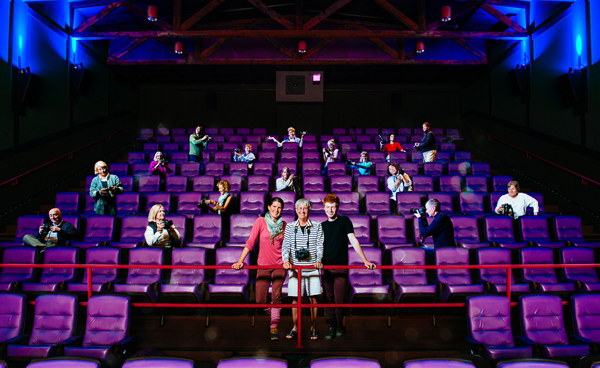
The photo option Alison and I agreed upon took some serious pre-production thinking and had to be executed with the utmost patience. I wanted the photograph to highlight the new space as well as each individual’s unique personality and attitude towards their photography. I spent the first six months of this year shooting carefully lit environmental portraits as a part of a project that I called The 365 Project. Combining both my creative and technical skills, I knew how to coax my subjects into emoting the way I wanted them to and how to execute a clean composite consisting of 17 original raw files all masked out onto a clean plate/pre-shot background. In other words, I shot each person individually (setting up lighting for each one), then shot the empty Film Center, and put it all together in Photoshop:
sept2013blog

The September 2013 group photo was such a great take-home bonus for the students, but it also gave them all an opportunity to learn how to shoot better portraits. So many of the students I’ve helped teach come to the Alison Shaw Workshop with a background in “people photography” expecting to refine their fine-art eye with the help of Alison. Showing them how I approach the craft of portraiture shines new light on what might’ve gotten old for them, and I hope that my future group photos will inspire students just as much as this year’s did. I am so lucky to spend two of my fall weeks with Alison teaching and hope that the opportunity will be offered to me for years to come.

All photos by Eli Dagostino
2022-05-28T17:57:30+00:00October 2nd, 2013|2 Comments

And the winner is …

WE HAVE a winner! A clear winner, in fact. As of this writing, with 92 “likes,” the easel sign that readers liked the best is:

Monhegan

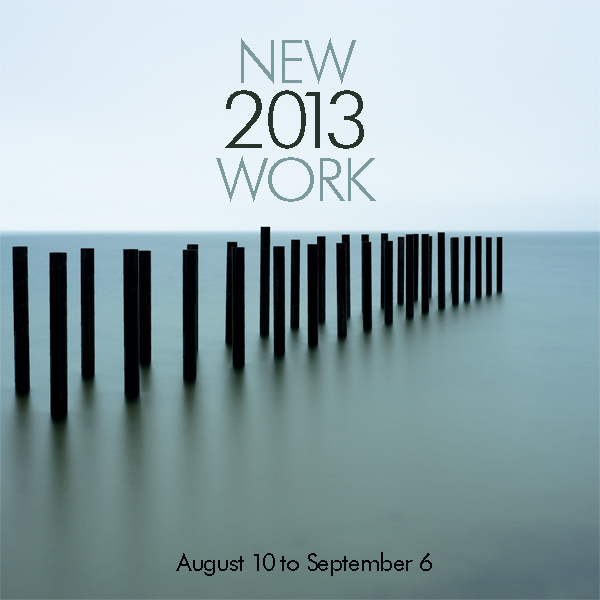
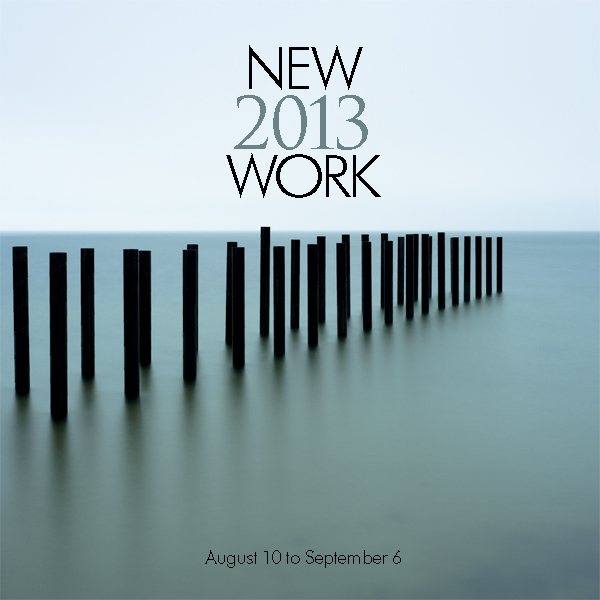
This has been so interesting to me. A couple of my favorites came in second and third, but this was clearly the top choice, by almost 30 votes. Ironically, neither Alison nor I “get” this one. The “2013” in between the other words doesn’t make sense to me, and the “NEW” makes it redundant, I think. So, what to do? We respect the votes, and wanted to make this work.

Yesterday, in anticipation of the Arts District Stroll today, we hung our newest show. So I worked for awhile on the winning design. Just a tweak, I thought. I needed to alter it so we’d like it better, but stay in the spirit of the concept our readers like best. I came up with the following, with Alison standing behind my desk. “I was just about to suggest putting the “2013” in a serif,” she said as I did it. We’re usually in agreement about these things, so that confirmed it. We like it now:

Monhegan

Thanks for all of your great suggestions! I hope you like the end result. I’ll let you know if anyone stops in and asks where the New York photos are…

2022-05-28T17:58:45+00:00August 10th, 2013|0 Comments

Designer’s dilemma

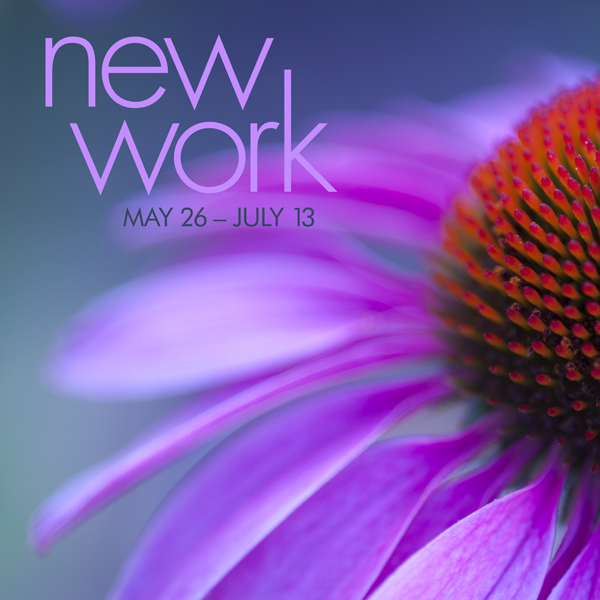
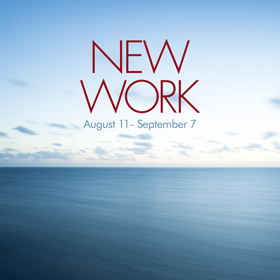
AN INTERESTING THING has been happening at the gallery. Every other week or so, someone comes in and looks around, ending up at my desk with a quizzical look on his/her face. “Is this all New York, or just some of it?” or “Where are the New York photos?” I didn’t get it at first. But it kept happening. Obviously something was triggering the confusion. Finally, someone said “The sign said ‘New York,’ so I’m confused.” We went out and looked at the sign – “Oh my gosh! I thought sure it said New York! I must be losing my mind!”

So, for the next couple of shows, I used all caps. That’ll fix it.

Nope.

Spread out onto one line?

No.


Interestingly, as I’ve talked with these customers, it turned out they were all highly-educated, and most of them subscribed to New Yorker magazine, which uses all caps for the logo. Oh, and there’s New York magazine – also all caps.


I decided to try a different cut of Futura (the font I use for our business), but in bold (below). One more shot at using the words I want to. Alas, it’s still confusing folks. And yeah, I know it looks pretty much the same as the other ones.

When I was a designer at the Boston Globe, it was fascinating to witness the variations in perception, in people’s response to headlines and design. We were lucky to have a large, diverse staff. Whether it was a page on my drafting table or (later) on my mac, I loved to hear the reactions of passersby. I’d often be surprised at how differences – gender, age, race, sexuality, education, marital status, parents, non-parents, religion, political party, country/state of origin – influenced each opinion. It made for some lively discussions, and hopefully better design.

I’ve held on long enough. I’m not sure I’ve ever been this stubborn about wordage on something I’ve designed! But it’s time. I guess I’ve gotta come up with a new way to say that we’re showing all new work. New images? New photos? All new? I want it to feel sophisticated but simple. “Photos” don’t feel like art. But “photographs” is so formal, so long. Designers obsess over minutiae like this. I’ve had conversations with other font geeks over ampersands, and capital T’s. This is fun for me. At least it will be again, when I figure out what to say.

Suggestions much appreciated…

2022-05-28T18:35:28+00:00July 23rd, 2013|68 Comments

Behind the shot: A stormy winter

by Alison Shaw

Eastville 2013

THIS WINTER WAS FANTASTIC for photographing storms on the Vineyard. Anytime there’s a storm in the forecast, everything in my life comes to a screeching halt so I can focus on shooting. Once the storm is close to its peak, I leave my cozy home and happily head out into the elements, telling my family I’ll be back once the storm subsides or the sun goes down. The ones I particularly enjoyed shooting were Hurricane Sandy in late October, which was downgraded to a tropical storm by the time it reached us but nonetheless packed a powerful punch; winter storm Nemo in early February; and a March nor’easter. Sandy, in particular, was quite exciting, because there were really humongous waves and powerful winds, and it actually rearranged some of the shoreline of the Vineyard. I noticed this most dramatically at Lucy Vincent Beach, where the waves literally scoured all the sand off the beach, leaving rugged clay and stone exposed underneath. As it turned out, it wasn’t just the day of Sandy that was exciting – I continued to visit Lucy Vincent a couple times a week for several weeks. Each time it was different, often dramatically so. The big cliff at the end was weakened by the storm, and kept changing with the tides, until it finally collapsed into the sea.

With Nemo, I took a photo of Menemsha Harbor crusted in snow, the fishing boats and shacks covered in snow and ice, and a dramatic sky overhead. Earlier that day my car had gotten stuck in a snowdrift for the first time ever. Even though there wasn’t a lot of snow, the wind was creating significant drifts. I always foolishly plow through them, but this time didn’t work so well. Another car got stuck at the same time. I walked home through the snow to get a shovel, then hiked back to my car near Ocean Park to shovel it out. Total fail. Then, luckily, a guy with a large bucket-loader came to our rescue and pulled the cars out.

The March nor’easter brought high seas, spitting snow and rain, and strong winds. It was during this storm that I photographed the dock (top photo) at Eastville Beach – or what was left of the beach. What makes this shot unusual and compelling is that you’re not grounded by seeing the beach at all. In normal, non-storm conditions, the beach is very much in evidence. Here, the dock is isolated within the water – it’s a dock from nowhere, to nowhere.

To shoot this photo, I parked my car as close to the dock as I could, and planted my heavy tripod on the beach. I positioned my body to block the snow and wind from the lens, and took repeated exposures of 2 to 6 seconds, while the waves crashed over and through the dock and pilings. I chose a slow shutter speed to create the misty effect, caused by the motion of the waves. The bright reflection down the middle of the dock was caused by water sweeping over the dock as the waves broke, the wet wood reflecting the color of the gray sky. I stayed out in the frigid, windy, wet elements as long as my camera and I could bear it, and then took refuge in my car to warm up. Once my camera and glasses were dry (I keep a bunch of old white t-shirts in my car for this purpose), and I had feeling back in my fingers, I headed back out on the beach for another 5-minute stint. I pretty much repeated that process until the wind settled down a bit, making the conditions less ideal. One of the things I love about the resulting photo is the composition – the dock creates a strong line, leading your eye directly to the tip of West Chop in the distance.

We’ve just printed this image on canvas – big – and hung it on the main wall for the new show at Alison Shaw Gallery. Sue picked a deep blue-gray for the wall, to match the tones in the photo. The Arts District Stroll is tomorrow night (Saturday, July 13th), from 4 to 7pm – come by if you’re on the island.

2022-05-28T18:36:57+00:00July 13th, 2013|5 Comments

My to-do list

I MENTIONED TO ALISON that it’s already been over a month since her last blog entry, knowing that she’s way too busy to write one at this point. So I suggested that I just interview her about what she’s doing – kind of an inside view of her life as a photographer, entrepreneur, wife, mom, and, very busy person. Here’s what she said:

“Off the top of my head… I’m working on three books for Jan (Vineyard Stories publishing) – one’s for Morning Glory Farm, one’s for the Harbor View Hotel, and one’s a series of essays by summer Vineyarder Joan Bowman. Plus there are potential cookbooks in the wings – we’re just waiting for the go-ahead for those. For Morning Glory, I’m running around after tractors, coming home with my clothes covered with strawberry stains. That was from the “emergency” photo shoot of the last crop – I got a call yesterday that I had to drop everything and run right out to the fields. The last of the asparagus was already picked and in the bin, but there was just one more round of strawberry picking to be done, and they wanted me to be there to capture it. (I asked if she ate any, and she laughed – she snuck a few and they were amazing).
The Joan Bowman book will mostly be up-Island locations and events that are summer memories for her. I’m really looking forward to it, because it’s putting a fresh spin on material that I’ve shot so many times, but I’ve so taken for granted, that in recent years I haven’t photographed it – for example, the sunset scene at Menemsha. And the Harbor View, I feel like my mission there is to capture the essence of this gorgeous hotel, primarily in summer, but acknowledging that it’s become a year-round institution as well. It’s really capturing the feel of what it’s like to be at a grand old hotel overlooking the lighthouse, dressed in your Edgartown reds, sipping a martini, after a couple rounds of tennis and a swim in the pool, and before heading to the harbor on a sunset cruise on the Harbor View’s classic yacht. It’s evoking a time gone by, but that’s still very much alive on the Vineyard.

The other stuff I’m juggling includes ongoing things for Martha’s Vineyard Magazine. The current issue has a South Beach photo essay of mine. Coming up in the next issue will be portraits of Rose Styron, and blueberries for a cooking piece by Cathy Walthers. I also contributed to a major story about erosion on the Island for the August issue of the magazine (one of the photos appears on this week’s Gazette front page, below).

Patrick Phillips has been interviewing me for his magazine, MV Arts & Ideas. I think I’ll be in the next issue.

The whaleboat is now bound for Mystic, so I’ve been busy wrapping up that project. It’s a magazine assignment, but it’s also a personal project for me. Yesterday I got up at 4am to photograph the departure of the whaleboat, being towed by Nat Benjamin’s boat Charlotte, bound for Mystic and her home on the Charles W. Morgan. I’m planning to go to the launch of the Morgan if I can, in mid-July. I’ll be teaching in Maine that week, so I’ll already be off-Island.

And then I’m reviving what’s now a 14-year project of photographing artist’s studios. I’ve already shot in the studios of Traeger di Pietro and Don Mckillop, and in the next couple of weeks I’ll be shooting the studios of Elizabeth Taft, Dan Van Landingham, Leslie Baker, and Bill Mclean. I’d love suggestions for working studios of established artists – the messier the better!

I’ve also gotta write my blog. (laughs – we joked a lot about launching the new site with a blog, and that she’d have to WRITE the blog to HAVE a blog…).

One whole area of exploration is my return to black & white. I don’t think I’ve shown any new black & white images for ten years now. Most of my new images came from the dramatic storms on the Vineyard over the last six months. Many of them were published in the Gazette, so that got me thinking in black & white again. And that subject, the storms, really lent itself to black & white. It’s interesting – you go back eight years, and producing color prints was expensive. We sent images off-Island to printing companies, paid for priority Fedex both ways, back and forth. Black & white was easy – going in the darkroom and giving it a try. But today the tables have turned. Producing color is something we do in-house, and black & white requires working with off-Island fine art printers. No one on the Island does traditional silver gelatin prints that I know of, at the scale I want to do. All to achieve the look and quality I once did myself.
The other major thing is planning this summer’s shows, including the opening receptions at our gallery. (The first upcoming show, at the Granary Gallery, opens on July 7th. The next is the July Stroll in the Arts District, which is July 13th.)

And I keep up with the recycling and the dump runs (she always seems to toss this in). Oh, and did I mention raising two teenagers?

Those are the main things. And trying to go for occasional walks, and sitting down for a coffee with you.”

So that’s all. We also have the family and house-related errands and appointments most everyone has. Jan Pogue wrote a lovely blog the other day about living on the Vineyard. It’s worth the read. I’m mentioning it because you may not recognize that the friend she refers to (about halfway through) is Alison. It’s a rat race in the summer, and very different from her time as a summer kid. But it’s still worth the race.

2022-05-28T18:40:08+00:00June 28th, 2013|14 Comments

Welcome to our newly-designed website!

by Sue Dawson

THIS HAS BEEN a labor of love. As some of you know, I’m an art director, and have been doing our marketing and identity design for years. When it came to redesigning our website, though, I wanted to work with an expert in web design – someone who would feel comfortable working with Alison and me as a team. I know from experience that it’s really hard to design for other artists. REALLY hard. They (we) usually have an idea of what they want, and it can be exasperating trying to create what only they can see, in their mind’s eye. So it was crucial to find someone we clicked with, someone who’d get what we’re doing. I went to a seminar on website marketing led by a local designer, Kathleen Forsythe, and programmer, Heather Goff. Bingo. (more…)

2022-05-27T15:43:25+00:00May 22nd, 2013|10 Comments

Building a whaleboat

by Alison Shaw

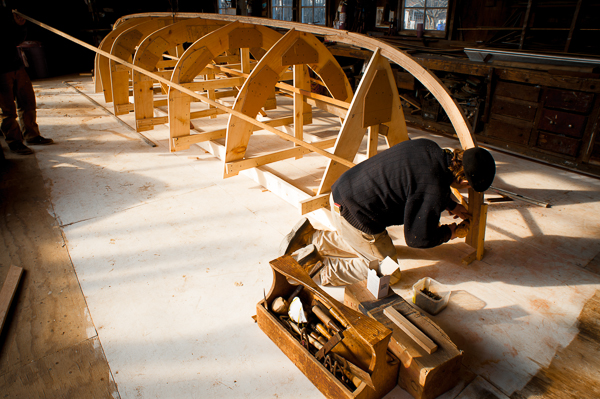
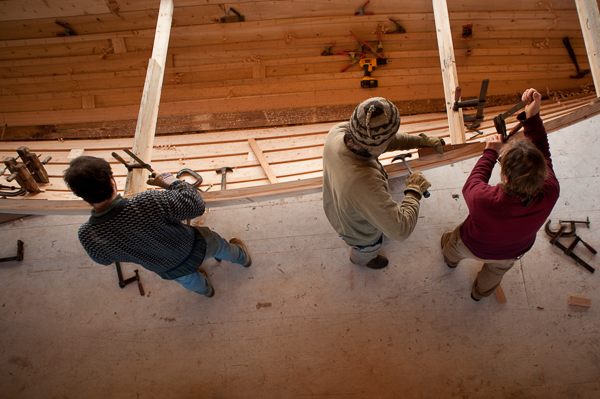
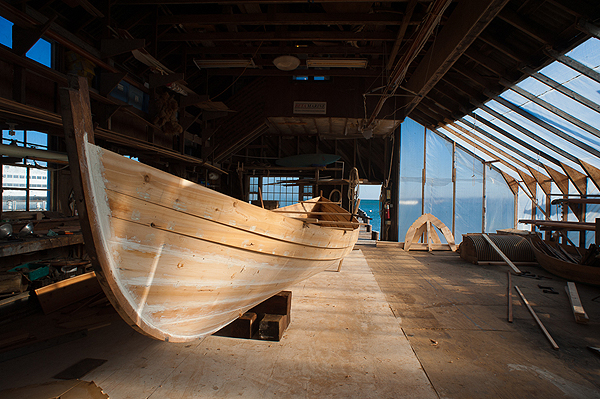
I’M CLOSE TO COMPLETING a new project chronicling the construction of a whaleboat for the Charles W. Morgan, America’s last surviving wooden whaleship, at Gannon and Benjamin Boat Yard in Vineyard Haven. This past December I happened to wander into the boatshed on the harbor, and casually asked what they were working on. When Nat Benjamin said “a whaleboat,” I could hardly believe my ears. A whaleboat?

My timing couldn’t have been better, since work on the boat had only just begun, and the only visible signs of it were a bunch of lines and markings (otherwise known as lofting) on the floor of the shed, as well as the beginnings of what would comprise the backbone of the whaleboat. I knew, without a moment’s hesitation, that I had to document this project.

I have a long history of photographing boatbuilding projects at Gannon and Benjamin, dating back to 1995-96 when I photographed the construction of the 24-foot wooden sloop Maybe Baby for Bill Graham of West Tisbury. Two years later I began photographing the construction of the 60-foot schooner Rebecca, which took nearly four years to complete. In 2010, we produced the book Schooner about the process, which was written by Tom Dunlop, designed by my partner Sue, and published by Vineyard Stories. It never occurred to me that yet another boat building project at Gannon and Benjamin would ever capture my imagination, to the extent that I couldn’t resist starting the photographic process over again.

So why this passion of mine for a whaleboat in particular? It probably goes back to my first job as an 11-year-old summer kid in Edgartown. I remember my grandparents taking me to the Dukes County Historical Society and introducing me to Margaret Chatterton, Director of the society. She hired me to work the lunch shift at the Thomas Cooke House – my job was to give tours of the house to visitors, so I had to become familiar with the contents of the house and the history of the island. One of my favorite rooms in the Cooke House was the one devoted to the whaling history of the Vineyard. Among other things, there was a model of a Nantucket sleighride, portraits of serious looking whaling masters, a big hunk of baleen, an elaborate sailor’s valentine, and a tribute to the wives and children who also went to sea. My interest in whaling carried on through my many summers of working at the museum, followed by a “real” job as their archivist after graduating from college.

Back to the story of the Charles W. Morgan and the building of a whaleboat. What makes the Morgan so important is that it is the last surviving wooden whale ship from the great days of whaling. She’s also the oldest American commercial vessel still in existence, and in 1967 was designated a National Historic Landmark. And what makes the Morgan so interesting to me as a Vineyarder are its many connections to the island. The Morgan was built in New Bedford in 1841 by the Hillman family, who were originally from Chilmark. She made 37 voyages, under the command of 20 different captains, before retiring in 1921. Seven of her masters hailed from the Vineyard, including her last, Captain George Fred Tilton of Chilmark, who served as her port captain. Since 1941 she has been on display and open to the public at Mystic Seaport. The Morgan has been undergoing a complete multimillion restoration begun in the fall of 2008, and is scheduled to be re-launched in July of this year. What will be her 38th voyage is scheduled for 2014, and includes visits to historic New England ports including Vineyard Haven!

The Morgan will be carrying seven whaleboats. Each of these seven boats is being privately funded and built by one of seven different boat builders. Gannon and Benjamin Boat Yard, not surprisingly, was invited to build one of the whaleboats.

Ginny Jones at G&B kindly kept me up to date on both the progress of the whaleboat as well as filling me in on the history of the Morgan. She reported that Captain Bob Douglas, master of the topsail schooner Shenandoah, was inquiring as to what kind of whaleboat they were building. Apparently, it is patterned on the many whaleboats built by the Beetle Company in New Bedford. Bob noted that the company had not just patterns, but piles of pre-cut spare parts. This meant that in the heyday of whaling, if someone asked for a whaleboat, a team could build one in a day!

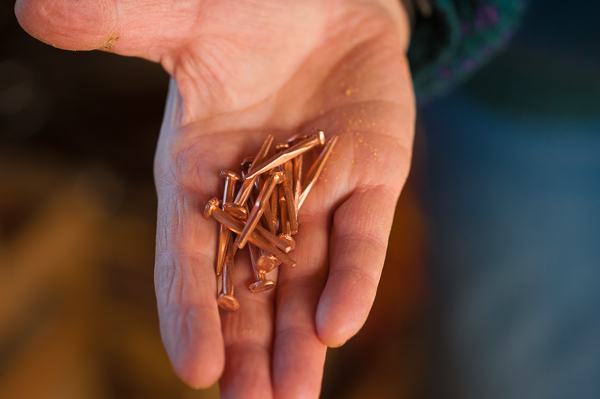
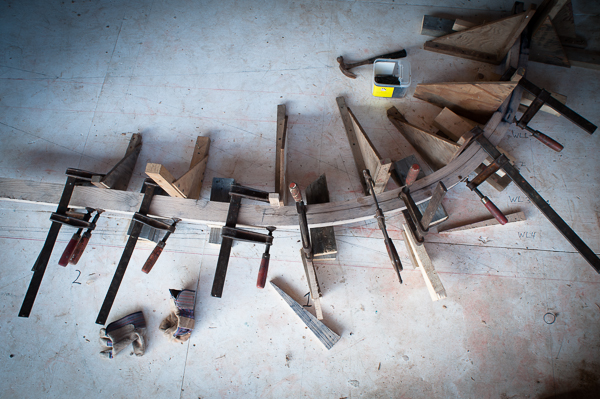
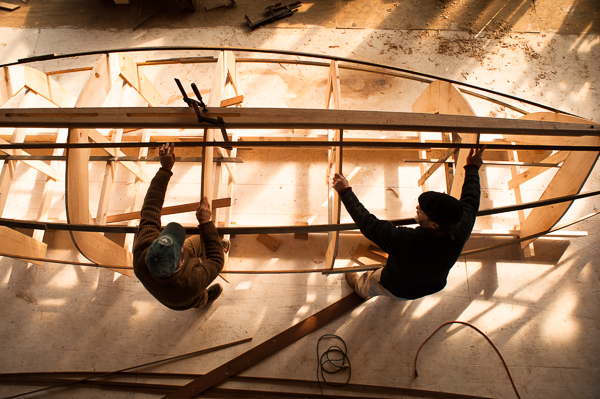
As for the photos, my self-assigned job has been to document the process, and bring my own visual aesthetic to the photos. I couldn’t ask for better raw material to work with – the wood, the fittings, the tools and the cluttered setting of the boat building shed on the harbor. Not to mention that the boat builders themselves look like they could be from central casting, with their rugged good looks, hand-knit fishermens’ sweaters, and well-worn work boots and gloves (thank you in particular to Nat Benjamin, and young Nat Quinn). The lines of the whaleboat as it evolved are sturdy and utilitarian, yet classic and graceful. The outer shed where the boat was built is enclosed on one side by translucent plastic, so it’s like being inside a huge soft box – plenty of beautiful light. Then, inside the inner sanctum of the shop, it’s dark with aged wood punctuated by vintage machinery and an old woodstove. It’s lit with a few bare bulbs and some strong directional light pouring through a single window on the east side of the building – just gorgeous, making my job easy.
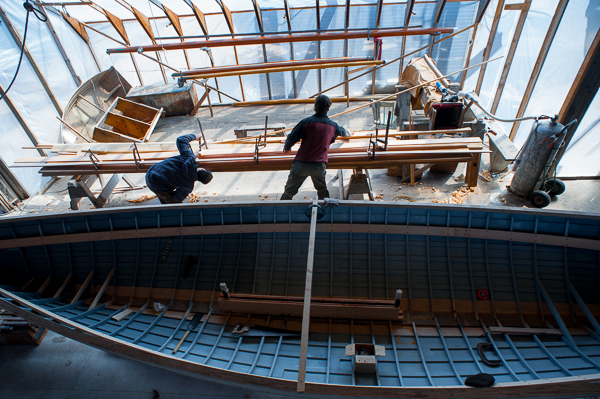
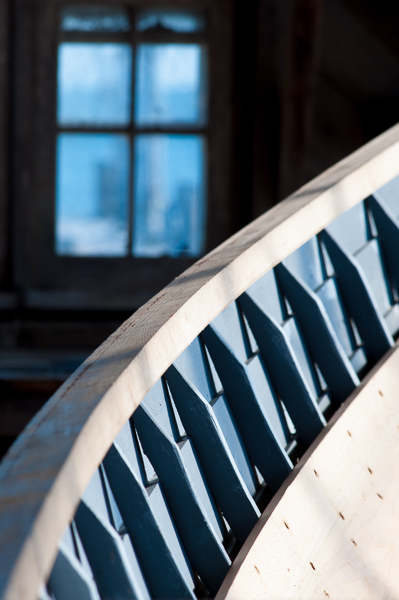
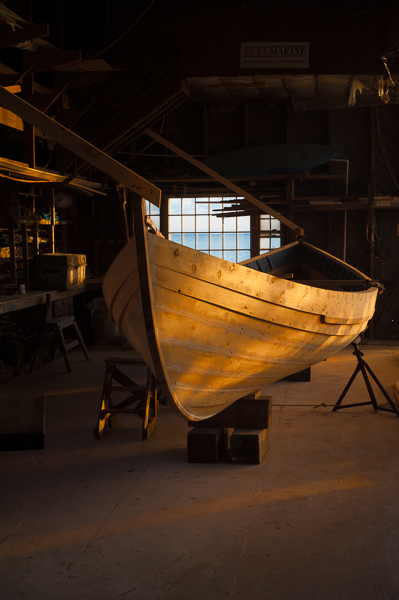
All that’s left to do are a few odds and ends and perhaps a final coat of paint. The launch is scheduled for Saturday, June 15, 2013 at 4pm. Not long after, she’ll be on her way to Mystic in time for the Wooden Boat Show the end of June. The story of her construction, launch, and journey to her new home on-board the Charles W. Morgan, will be published in Martha’s Vineyard Magazine, along with a story by long-time collaborator Tom Dunlop.

2022-05-28T18:55:10+00:00May 21st, 2013|7 Comments

To know an island

A guest blog: by Kelsey Perrett

IT DOESN’T TAKE THAT LONG to see an island that’s less than 88 square miles. About a week, I would have guessed when I first moved to Martha’s Vineyard this May. All it really requires is one long drive down State Road, a stroll around downtown Oak Bluffs and Edgartown, maybe some sidetracking to hotspots like Menemsha, and you’re pretty much qualified to drive a tour bus.

One week, to see the island in its entirety. The length of an average summer vacation.  But how long to know an island? To come to understand the character of a place—its beauty and its quirks—in the same way you know your oldest friend?

This is a question I came to contemplate when I began working at the Alison Shaw Gallery in Oak Bluffs. At times, the island made me feel a bit claustrophobic. Even if you tried to leave in mid-summer, the influx of tourists could make it impossible to obtain a boat reservation. I wondered how anyone could spend more than a few months here without going completely stir-crazy. But then there was Alison: a woman, who like me had moved here the summer after graduating college, and never left. Not only had she made the island her home, she had made it her primary inspiration, and the subject of more than 90% of her work.

For me, spending so much time around Alison’s work was a means of getting to know the Vineyard intimately. Sure, it was a small place, but there was a lot to look at if you learned to look at it the right way. Flipping through the archives, I realized Alison must have taken hundreds, perhaps thousands of shots of Lucy Vincent Beach. Yet each one captures a different mood, a different angle of that one gorgeous spot. In some, somber gray haze encapsulates the beach’s signature rocks, while others are painted with the pastel wash of sunrise. Others still capture the idyllic splash of a wave on a crisp blue day.

In this way, Alison’s photos suggested to me that there were many ways to see the Vineyard, and therefore, many ways to love it. They so perfectly displayed how a solid stripe of color on a moored boat contrasts with the liquid blue beneath. Or the way a vibrant Menemsha sunset silhouettes ships and fishermen against an orange backdrop. Or the varieties of mist that collect atop a still Lagoon Pond at dawn. The oldest were in black and white, showing off striking contrasts. The newest: abstract smears that emphasized the interplay of light and color. They captured not only a place, but the living spirit of that place, the little idiosyncrasies that have made islanders and visitors fall in love with Martha’s Vineyard over and over again.

Anyone can take a snapshot of a new place, because its newness makes it immediately remarkable to the photographer. But that doesn’t make it art. It’s the ability to re-envision the mundane that blesses the true artist. So how long does it take to know an island? Ask Alison Shaw, and the answer would likely be “a lifetime.”

2022-05-28T18:55:45+00:00September 8th, 2012|1 Comment

Title

Go to Top